
Securing a loyal customer base is paramount for any startup navigating the competitive landscape. Unlike established businesses with brand recognition and extensive resources, startups face unique challenges in retaining customers. This guide delves into proven strategies to build lasting relationships, foster loyalty, and ultimately drive sustainable growth. We’ll explore key performance indicators (KPIs), effective communication techniques, and the crucial role of customer service in achieving lasting customer retention.
From designing compelling onboarding experiences to leveraging customer feedback for continuous improvement, we’ll cover a range of practical, actionable steps. We’ll also examine how technology, such as CRM systems and marketing automation tools, can be effectively utilized to enhance retention efforts and maximize the return on investment (ROI) of these strategies. This comprehensive approach will empower startups to transform customer relationships into a powerful engine for long-term success.
Defining Customer Retention for Startups
Customer retention, for startups, is the art and science of keeping customers engaged and loyal over time. It’s about building relationships that extend beyond the initial sale, fostering advocacy, and ultimately driving sustainable growth. Unlike established businesses with large customer bases and brand recognition, startups face unique challenges in this area.Startups often operate with limited resources, making comprehensive retention strategies a balancing act.
They are also frequently focused on acquiring new customers, sometimes at the expense of nurturing existing ones. Furthermore, startups are often experimenting with their product-market fit, meaning their offerings might evolve significantly, potentially alienating early adopters. Finally, the intense competition within many startup sectors necessitates a proactive and highly effective retention strategy to ensure survival.
Unique Challenges in Customer Retention for Startups
Startups face several distinct hurdles in retaining customers. Limited budgets restrict the implementation of sophisticated retention programs. The focus on rapid growth can lead to neglecting existing customers. Product iterations, crucial for improvement, may inadvertently disrupt customer experience. High competition necessitates superior retention to outmaneuver rivals.
A lack of established brand loyalty requires a strong focus on building trust and fostering strong customer relationships from the outset. Finally, the smaller size of the customer base means that the loss of even a few customers can have a disproportionately large impact on revenue.
Key Performance Indicators (KPIs) for Startup Customer Retention
Tracking the right KPIs is essential for measuring the effectiveness of customer retention efforts. Startups should monitor metrics such as customer churn rate (the percentage of customers lost over a specific period), customer lifetime value (CLTV, the total revenue generated by a customer over their relationship with the company), net promoter score (NPS, a measure of customer satisfaction and loyalty), and customer retention rate (the percentage of customers retained over a specific period).
These metrics offer a clear picture of the health of the customer base and highlight areas needing improvement. Analyzing these KPIs alongside customer acquisition costs (CAC) allows startups to understand the overall profitability of their customer base and optimize their strategies.
Examples of Successful Customer Retention Strategies
Several startups have successfully implemented strategies to retain customers. For instance, Dropbox, in its early days, utilized a referral program incentivizing existing users to invite friends, generating significant organic growth while reinforcing customer loyalty. Another example is Slack, which fostered a strong community through its platform features, enabling users to collaborate and build relationships, thus increasing engagement and retention.
Airbnb focuses heavily on building trust and positive experiences for both hosts and guests, using detailed reviews and robust customer support to ensure satisfaction and repeat bookings. These strategies, while diverse, share a common thread: a deep understanding of customer needs and a commitment to building long-term relationships.
Utilizing Technology for Customer Retention
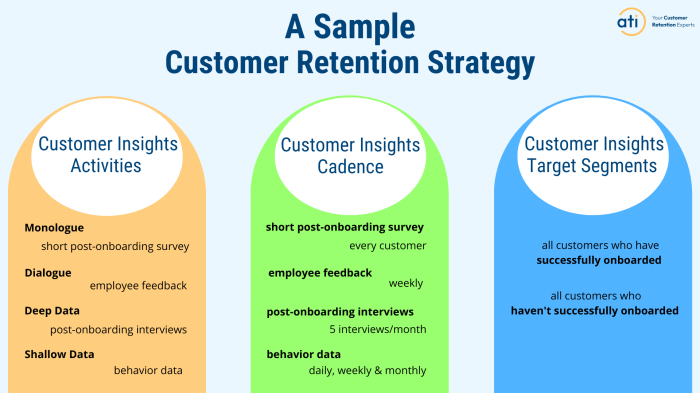
In today’s competitive landscape, startups must leverage technology to enhance customer retention strategies. Effective use of technology allows for personalized interactions, proactive issue resolution, and data-driven decision-making, all crucial for building lasting customer relationships. This section explores how various technological tools can significantly improve customer retention efforts.The integration of appropriate technologies is paramount for efficient customer relationship management and proactive retention strategies.
This translates to improved customer satisfaction, reduced churn, and ultimately, increased profitability.
CRM Systems and Customer Retention
Customer Relationship Management (CRM) systems are fundamental tools for improving customer retention. They provide a centralized repository for all customer interactions, allowing startups to track communication history, purchase patterns, and support requests. This holistic view of the customer journey enables businesses to identify at-risk customers and proactively address their concerns. For example, a CRM system might flag a customer who hasn’t made a purchase in several months, prompting a targeted marketing campaign or a personalized outreach from a customer service representative.
This proactive approach helps to re-engage customers and prevent churn. Furthermore, CRMs often incorporate features for automating tasks such as follow-up emails or scheduling appointments, freeing up valuable time for staff to focus on building stronger customer relationships.
Marketing Automation and Personalized Communication
Marketing automation tools enable startups to create personalized communication campaigns based on customer segmentation and behavior. These tools automate repetitive tasks such as email marketing, social media posting, and lead nurturing. For instance, a startup could use marketing automation to send targeted email sequences based on customer purchase history or website activity. A customer who recently viewed a specific product might receive a follow-up email with a discount code or a personalized recommendation.
This personalized approach increases customer engagement and fosters loyalty. The ability to segment customers based on demographics, purchase behavior, or website interactions allows for highly targeted campaigns, resulting in higher conversion rates and improved customer retention.
Data Analytics for Churn Prediction and Prevention
Data analytics plays a crucial role in predicting and preventing customer churn. By analyzing customer data, startups can identify patterns and behaviors that are associated with churn. This might include factors such as declining purchase frequency, negative feedback, or a high number of support tickets. For example, a subscription-based startup might use data analytics to identify customers who are consistently logging in less frequently.
This data could trigger a proactive intervention, such as a personalized email offering additional support or suggesting relevant new features. Early identification of at-risk customers allows for timely interventions, preventing churn and retaining valuable customers. This predictive capability transforms reactive customer service into a proactive strategy.
Measuring the ROI of Customer Retention Efforts
Understanding the return on investment (ROI) of customer retention initiatives is crucial for startups, ensuring resources are allocated effectively. By tracking key metrics and establishing a clear reporting framework, startups can optimize their retention strategies and maximize their return. This involves a combination of quantitative and qualitative analysis to paint a complete picture of the effectiveness of retention efforts.
Calculating the ROI of Customer Retention Initiatives
Calculating the ROI of customer retention requires a multi-step approach. First, identify the costs associated with each initiative, including marketing spend, personnel time, and software expenses. Next, determine the increased revenue generated by retained customers. This can be calculated by comparing the lifetime value (LTV) of retained customers to the LTV of customers who churned. The formula for ROI is then: (Increased Revenue - Costs of Initiatives) / Costs of Initiatives100%.
For example, if a retention program cost $5,000 and generated an additional $20,000 in revenue, the ROI would be 300%.
Key Metrics for Assessing Retention Strategy Effectiveness
Startups should track several key metrics to gauge the success of their retention strategies. These include customer churn rate (the percentage of customers who stop using a product or service within a given period), customer lifetime value (the total revenue a customer generates over their relationship with the company), and customer retention rate (the percentage of customers retained over a specific period).
Net Promoter Score (NPS), measuring customer loyalty and willingness to recommend, provides valuable qualitative insight. Analyzing these metrics together provides a comprehensive view of retention performance. For instance, a high churn rate despite a high LTV might indicate issues in onboarding or product-market fit.
Framework for Reporting on Customer Retention Performance
A robust reporting framework is essential for continuous improvement. Regular reporting (e.g., monthly or quarterly) should include key metrics like churn rate, retention rate, LTV, and NPS. This report should also include a qualitative analysis of customer feedback, identifying common pain points or areas for improvement. Visualizations such as charts and graphs can effectively communicate performance trends.
For example, a line graph displaying churn rate over time can quickly highlight any significant changes and prompt investigation into the underlying causes. By analyzing these reports, startups can identify areas needing attention, such as improving customer service or enhancing product features, to further optimize retention strategies.
In conclusion, achieving high customer retention rates requires a multifaceted approach that prioritizes building strong customer relationships, proactively addressing needs, and continuously seeking feedback for improvement. By implementing the best practices Artikeld here – from designing effective onboarding processes and loyalty programs to leveraging technology for personalized communication and data-driven insights – startups can significantly increase customer lifetime value and build a sustainable, thriving business.
Investing in customer retention isn’t merely an expense; it’s a strategic investment in long-term growth and profitability.
Questions Often Asked
What are some common mistakes startups make in customer retention?
Ignoring customer feedback, providing poor customer service, failing to personalize communication, and neglecting to build a sense of community are common pitfalls.
How can I measure the success of my customer retention strategies?
Track key metrics like customer churn rate, customer lifetime value (CLTV), Net Promoter Score (NPS), and customer retention rate. Analyze these metrics over time to assess the effectiveness of your initiatives.
How often should I communicate with my customers?
The frequency depends on your industry and customer preferences. Aim for consistent, relevant communication without overwhelming them. A balance of proactive and reactive communication is key.
What is the role of technology in improving customer retention?
CRM systems, marketing automation tools, and data analytics platforms help personalize communication, automate tasks, identify at-risk customers, and track key metrics for improved retention efforts.


