
Exceptional customer service is no longer a luxury; it’s a necessity in today’s competitive landscape. Building strong customer relationships requires more than just resolving immediate problems; it demands a proactive, empathetic, and technologically savvy approach. This guide delves into the core principles of best customer service practices, exploring strategies for exceeding expectations and fostering brand loyalty.
From defining excellent service and implementing proactive strategies to leveraging technology and measuring performance, we’ll cover the essential elements needed to cultivate a customer-centric culture. We will also examine effective communication techniques, handling complaints, and empowering your customer service team to deliver exceptional experiences consistently.
Defining Excellent Customer Service
Excellent customer service goes far beyond simply resolving a customer’s immediate problem. It’s about creating a positive and lasting impression that fosters loyalty and advocacy. It involves anticipating needs, exceeding expectations, and building genuine relationships with customers. This holistic approach ensures customer satisfaction and contributes significantly to a company’s overall success.Exceptional customer service is built upon several core principles.
These principles, when consistently applied, create a superior customer experience that sets a business apart from its competitors.
Core Principles of Excellent Customer Service
These core principles guide the interactions and strategies employed to deliver excellent customer service. They represent the foundational elements that contribute to a positive and lasting customer relationship. Adherence to these principles leads to increased customer satisfaction, loyalty, and ultimately, business success.
- Empathy and Understanding: Truly understanding the customer’s perspective and emotions is crucial. This involves actively listening, showing genuine concern, and validating their feelings, even if you don’t necessarily agree with their viewpoint. For example, acknowledging a customer’s frustration with a delayed delivery by saying, “I understand this delay is incredibly frustrating, and I apologize for the inconvenience,” demonstrates empathy.
- Proactive Problem Solving: Anticipating potential issues and addressing them before they escalate demonstrates foresight and commitment to the customer. This could involve proactively contacting customers about potential shipping delays or offering preventative maintenance solutions.
- Efficiency and Responsiveness: Customers value their time. Providing prompt and efficient service, whether it’s responding quickly to inquiries or resolving issues swiftly, demonstrates respect for their time and needs. For instance, aiming for a response time of under an hour for online inquiries shows efficiency and responsiveness.
- Personalization and Individualization: Treating each customer as an individual, remembering past interactions, and tailoring the service to their specific needs builds a stronger relationship. This might involve recalling a customer’s name or preferences from previous interactions.
- Clear and Effective Communication: Using clear, concise, and easily understandable language ensures the customer understands the information provided. This includes avoiding jargon and actively confirming their understanding.
Framework for Evaluating Customer Service Effectiveness
A robust framework is necessary to objectively assess the quality of customer service interactions. This allows for continuous improvement and ensures consistent delivery of excellent service. The framework should encompass both quantitative and qualitative measures.
| Metric | Description | Example |
|---|---|---|
| Customer Satisfaction (CSAT) Score | Measures overall satisfaction with the service received. | Surveys asking customers to rate their satisfaction on a scale of 1 to 5. |
| Net Promoter Score (NPS) | Measures customer loyalty and willingness to recommend the service. | Surveys asking customers how likely they are to recommend the service to others. |
| Average Handling Time (AHT) | Measures the average time spent resolving a customer issue. | Tracking the time taken to resolve each customer issue. |
| First Call Resolution (FCR) Rate | Measures the percentage of issues resolved on the first contact. | Tracking the number of issues resolved on the first call versus those requiring multiple contacts. |
| Customer Effort Score (CES) | Measures the ease of interacting with the service. | Surveys asking customers how easy it was to resolve their issue. |
Proactive Customer Service Strategies
Proactive customer service focuses on anticipating and addressing customer needs before they escalate into problems. It’s a shift from reactive service, where issues are dealt with only after they arise, to a preventative model that fosters stronger customer relationships and loyalty. This approach builds trust and demonstrates a genuine commitment to customer satisfaction, ultimately leading to a more positive and efficient customer experience.Proactive customer service strategies offer several key advantages.
By anticipating potential problems, businesses can minimize negative experiences, reduce the volume of support tickets, and improve overall efficiency. Furthermore, a proactive approach strengthens customer relationships, increases customer loyalty, and enhances the brand’s reputation. Ultimately, this translates to increased revenue and improved profitability.
Examples of Proactive Customer Service Approaches
Several effective strategies exist for proactively addressing customer needs. For example, sending personalized emails based on past purchase history, offering tailored product recommendations, or providing proactive updates on order status demonstrate attentiveness. Another effective approach is to anticipate common issues and develop FAQs, tutorials, or help articles that address those issues before customers encounter them. Finally, actively monitoring social media channels and online reviews allows businesses to identify and respond to concerns promptly, even before the customer directly contacts support.
These actions show customers that their needs are valued and understood.
Benefits of Implementing a Proactive Customer Service Strategy
Implementing a proactive customer service strategy yields significant benefits. Improved customer satisfaction is a direct result of addressing needs before they become problems. Customers feel valued and appreciated, leading to higher retention rates. Reduced customer churn translates directly to cost savings for the business. Additionally, a proactive approach can enhance brand reputation, leading to increased customer acquisition.
Proactive service often results in positive word-of-mouth marketing, boosting the company’s overall image. Finally, the improved efficiency stemming from fewer escalated issues allows businesses to allocate resources more effectively.
Integrating Proactive Customer Service into an Existing Business Model
Integrating proactive customer service requires a systematic approach.
- Analyze Customer Data: Begin by thoroughly analyzing existing customer data to identify common issues, pain points, and areas for improvement. This could involve reviewing support tickets, customer surveys, and social media feedback.
- Identify Potential Problems: Based on the data analysis, identify potential problems customers might face. This might include common technical difficulties, shipping delays, or difficulties understanding product features.
- Develop Preventative Measures: Create solutions to address the identified potential problems. This could involve creating FAQs, tutorials, improved product documentation, or proactive communication with customers regarding potential delays.
- Implement Proactive Communication Channels: Choose appropriate communication channels for proactive outreach. This might include email marketing, in-app messages, or social media updates. Ensure that the messaging is personalized and relevant to each customer segment.
- Monitor and Refine: Continuously monitor the effectiveness of the proactive strategies. Track key metrics such as customer satisfaction scores, support ticket volume, and customer retention rates. Use this data to refine and improve your approach over time.
For example, a clothing retailer might analyze data showing a high return rate for ill-fitting clothes. Their proactive response could include adding detailed size charts and fit guides to their website and product pages, as well as sending personalized email reminders to customers about their measurements when they add items to their cart. This proactive approach reduces returns, improves customer satisfaction, and saves the business time and resources.
Effective Communication Techniques
Effective communication is the cornerstone of excellent customer service. It’s not just about conveying information; it’s about building rapport, understanding needs, and resolving issues efficiently and amicably. This section explores key communication techniques that contribute to positive customer experiences.
Mastering effective communication involves more than simply speaking clearly; it requires active listening, empathetic understanding, and the ability to adapt your approach based on the customer’s needs and the communication channel used. The goal is to create a collaborative environment where both parties feel heard and understood, leading to faster resolution of issues and increased customer satisfaction.
Active Listening and Empathetic Communication in Issue Resolution
Active listening and empathy are crucial for resolving customer issues effectively. Active listening involves fully concentrating on what the customer is saying, both verbally and nonverbally, showing that you are engaged and understanding their perspective. Empathetic communication goes a step further by acknowledging and validating the customer’s feelings, even if you don’t necessarily agree with their perspective. This shows respect and builds trust, making the customer more receptive to solutions.
For example, instead of immediately jumping to a solution, start by saying something like, “I understand this is frustrating, and I’ll do my best to help you resolve this.” This simple statement acknowledges the customer’s feelings and sets a positive tone for the interaction.
Effective Communication Strategies for Difficult Customer Interactions
Handling difficult customers requires patience, composure, and a strategic approach. Remaining calm and professional, even when faced with anger or frustration, is essential. Using phrases like, “I understand your concern,” or “Let’s work together to find a solution,” can help de-escalate tense situations. Active listening is particularly important here; allowing the customer to vent their frustrations without interruption can help them feel heard and understood, making them more receptive to a resolution.
It’s also crucial to avoid arguing or getting defensive; instead, focus on finding common ground and working towards a mutually agreeable solution. Finally, always offer a sincere apology, even if you’re not directly at fault, to acknowledge the customer’s negative experience.
Best Practices for Communicating Across Various Channels
Effective communication varies depending on the channel. The following table Artikels best practices for different communication methods:
| Channel | Best Practice | Example | Potential Pitfall |
|---|---|---|---|
| Phone | Use a clear, concise, and professional tone; actively listen and summarize key points to confirm understanding. | “So, to summarize, you’re experiencing issues with [problem]. Is that correct?” | Interrupting the customer; using jargon or overly technical language. |
| Use a professional tone; be clear, concise, and provide all necessary information; proofread carefully before sending. | “Thank you for contacting us. We’ve received your request and will respond within 24 hours.” | Using informal language; failing to provide sufficient detail; delayed responses. | |
| Chat | Respond promptly; use clear and concise language; use emoticons sparingly to convey tone appropriately. | “Hi there! How can I assist you today?” | Ignoring the customer; using excessive abbreviations or slang; providing inaccurate information. |
| Social Media | Respond publicly and promptly; address concerns professionally and empathetically; direct private messages for sensitive information. | “We’re sorry to hear about your experience, [customer name]. We’d like to help resolve this. Please send us a private message with details.” | Ignoring negative comments; responding defensively; sharing private customer information publicly. |
Leveraging Technology for Enhanced Service
In today’s digital landscape, technology plays a pivotal role in shaping exceptional customer service. Businesses that effectively integrate technology into their service strategies gain a significant competitive advantage, improving efficiency, personalization, and overall customer satisfaction. This section explores how various technologies contribute to a superior customer experience.
Customer Relationship Management (CRM) systems and other technological advancements significantly enhance customer service operations. These tools provide a centralized repository of customer data, allowing service agents to access a comprehensive view of each customer’s interaction history, preferences, and purchase patterns. This holistic understanding empowers agents to provide more personalized and efficient service, addressing customer needs proactively and resolving issues swiftly.
For example, a CRM system might alert an agent to a customer’s past complaints before they even initiate contact, allowing the agent to anticipate and address potential concerns. This proactive approach demonstrates a commitment to customer well-being and builds stronger relationships.
CRM Systems and Enhanced Personalization
CRM systems are more than just databases; they are powerful tools for personalization. By analyzing customer data, CRMs can identify patterns and trends, enabling businesses to segment their customer base and tailor their communication and service offerings accordingly. This might involve sending targeted email campaigns, offering personalized product recommendations, or adjusting the service approach based on a customer’s past interactions.
The result is a more relevant and engaging customer experience, fostering loyalty and increasing customer lifetime value. Effective CRM implementation leads to reduced response times, improved first-contact resolution rates, and increased customer satisfaction scores.
Benefits of Self-Service Tools
Providing customers with easy access to self-service resources empowers them to resolve simple issues independently, freeing up agents to handle more complex inquiries. FAQs, knowledge bases, and online chatbots are excellent examples of self-service tools. These resources offer immediate answers to common questions, reducing wait times and improving overall efficiency. A well-designed knowledge base, for instance, can significantly decrease the volume of incoming calls and emails, allowing agents to focus on more demanding tasks and fostering a more positive customer experience.
Furthermore, self-service tools provide customers with 24/7 access to information and support, enhancing their convenience and satisfaction.
Comparison of Customer Service Technologies
Various technologies cater to different business needs and contexts. Live chat offers immediate interaction, ideal for addressing urgent queries or providing real-time assistance. Email provides a more formal and documented approach, suitable for complex issues or when a detailed record of the interaction is required. Phone support remains essential for customers who prefer a personal touch and immediate verbal communication.
Social media platforms offer another avenue for customer service, allowing businesses to engage with customers publicly and address issues transparently. The choice of technology depends on factors such as business size, customer demographics, and the nature of the products or services offered. A large enterprise with a diverse customer base might utilize a multi-channel approach, integrating live chat, email, phone, and social media support to cater to various preferences.
Smaller businesses might focus on a single or a couple of channels that best suit their needs and resources.
Measuring and Improving Customer Service Performance
Effective measurement is crucial for understanding the strengths and weaknesses of your customer service operations. By tracking key metrics and analyzing customer feedback, businesses can identify areas needing improvement and implement targeted strategies to enhance the overall customer experience. This iterative process of measurement, analysis, and improvement is vital for sustained success.Tracking and analyzing customer service data allows for a data-driven approach to improvement, moving beyond anecdotal evidence to informed decision-making.
This section will explore key metrics, data tracking systems, and the effective use of customer feedback to optimize customer service processes.
Key Metrics for Measuring Customer Service Effectiveness
Several key performance indicators (KPIs) provide valuable insights into customer service effectiveness. These metrics offer a quantifiable assessment of various aspects of the customer journey, enabling businesses to pinpoint areas for improvement. Regular monitoring of these metrics allows for proactive adjustments to service strategies.
- Customer Satisfaction (CSAT) Scores: CSAT scores measure how satisfied customers are with their interactions. These scores are typically obtained through surveys asking customers to rate their experience on a scale (e.g., 1-5 or 1-10). A high CSAT score indicates positive customer sentiment. For example, a company achieving an average CSAT score of 4.5 out of 5 demonstrates a high level of customer satisfaction.
- Net Promoter Score (NPS): NPS gauges customer loyalty by asking how likely they are to recommend a company to others. This metric provides a holistic view of customer experience, considering factors beyond individual interactions. A high NPS score signifies strong customer loyalty and advocacy. For example, an NPS score of 70 indicates a highly loyal customer base.
- Average Resolution Time (ART): ART measures the average time it takes to resolve customer issues. Shorter ART indicates efficient problem-solving and a positive customer experience. For example, an ART of under 24 hours for email inquiries reflects quick and efficient service.
- First Call Resolution (FCR): FCR represents the percentage of customer issues resolved on the first contact. High FCR rates indicate effective training and efficient processes, minimizing customer frustration. For example, an FCR rate of 80% suggests that most customer issues are resolved effectively during the initial contact.
- Customer Effort Score (CES): CES measures the ease with which customers can resolve their issues. A low CES score indicates a more streamlined and efficient process, reducing customer effort. For example, a CES score of 80% reflects a positive customer experience.
Designing a System for Tracking and Analyzing Customer Service Data
A robust system for tracking and analyzing customer service data is essential for identifying trends and areas for improvement. This system should integrate various data sources and provide tools for analyzing customer interactions.This requires a multi-faceted approach incorporating various technologies and methodologies. Data collection can involve integrating CRM systems, call center software, survey platforms, and social media monitoring tools.
Data analysis can involve using dashboards to visualize key metrics, identifying trends and patterns, and generating reports for management. For example, a company might use a CRM system to track customer interactions, a call center software to monitor call times and resolution rates, and a survey platform to gather customer feedback. These data points can then be combined and analyzed to identify trends and areas for improvement.
Using Customer Feedback to Enhance Customer Service Processes
Customer feedback, in its various forms, provides invaluable insights into customer experiences and expectations. Analyzing this feedback allows for targeted improvements to processes and service offerings.Utilizing feedback involves actively soliciting and analyzing customer comments, reviews, and survey responses. This data can reveal recurring issues, areas of strength, and opportunities for improvement. For example, a company might use sentiment analysis tools to gauge the overall tone of customer reviews and identify common complaints.
This information can then be used to refine processes, improve training, or develop new service offerings. Feedback can also be used to personalize the customer experience by tailoring interactions to individual needs and preferences. Regularly reviewing and acting on customer feedback demonstrates a commitment to continuous improvement and strengthens customer relationships.
Creating a Customer-Centric Culture
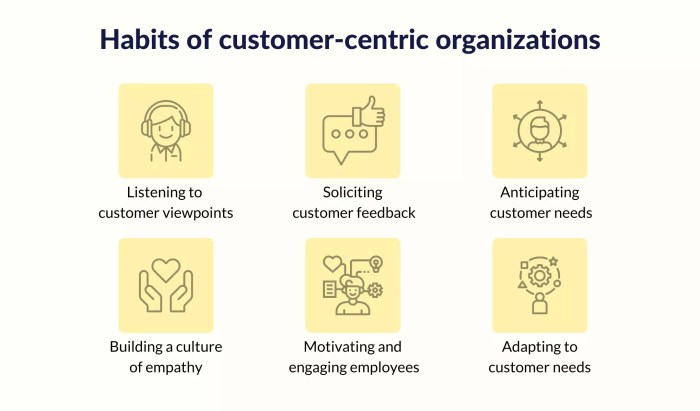
Cultivating a customer-centric culture isn’t merely a trend; it’s a fundamental shift in organizational philosophy that prioritizes customer needs and satisfaction above all else. This requires a concerted effort across all departments, a commitment from leadership, and the implementation of practical strategies to ensure consistent delivery of exceptional service. This section explores the key components of building and maintaining such a culture.A truly customer-centric organization places the customer at the heart of every decision, from product development to marketing and customer service interactions.
This involves actively seeking customer feedback, analyzing data to understand customer behavior, and empowering employees to resolve customer issues efficiently and effectively. It’s about creating a workplace where employees feel valued for their contributions to customer satisfaction and are equipped with the tools and training they need to excel.
Leadership’s Role in Driving Customer-Centric Initiatives
Leadership plays a pivotal role in establishing and sustaining a customer-centric culture. Leaders must champion the customer-centric vision, actively communicate its importance to all employees, and consistently model the desired behaviors. This involves setting clear expectations, providing the necessary resources and training, and recognizing and rewarding employees who demonstrate exceptional customer service. Effective leadership fosters a culture of accountability where everyone feels responsible for delivering a positive customer experience.
For instance, a CEO visibly engaging with customer feedback and using it to inform company strategy sends a powerful message about the importance of customer focus. Furthermore, regular leadership training on customer-centric principles ensures alignment and consistent messaging throughout the organization.
Aligning Departments Around Exceptional Customer Service
Achieving true customer centricity requires alignment across all departments. Marketing, sales, product development, and customer service must work together seamlessly to understand and meet customer needs. This requires clear communication channels, shared goals, and collaborative problem-solving. For example, the product development team should actively incorporate customer feedback into the design process, ensuring that new products and services meet customer expectations.
Similarly, the marketing team should create campaigns that resonate with the target audience, accurately reflecting the value proposition and customer experience. Regular cross-departmental meetings and shared performance metrics can foster this collaborative environment, ensuring that everyone is working towards the same goal: exceptional customer service. A well-defined customer journey map, collaboratively developed and regularly reviewed by all relevant departments, can significantly contribute to this alignment.
Ultimately, mastering best customer service practices isn’t just about resolving issues; it’s about building enduring relationships. By implementing the strategies Artikeld in this guide, businesses can transform their customer service operations, fostering loyalty, driving retention, and ultimately achieving sustainable growth. Remember that continuous improvement, driven by data analysis and customer feedback, is key to long-term success in providing exceptional customer experiences.
User Queries
What is the difference between reactive and proactive customer service?
Reactive customer service addresses issues
-after* they arise, while proactive service anticipates and prevents problems before they occur.
How can I measure the effectiveness of my customer service team?
Key metrics include customer satisfaction scores (CSAT), Net Promoter Score (NPS), resolution times, and first contact resolution rates.
What are some examples of self-service tools?
FAQs, knowledge bases, online chatbots, and help center articles are all examples of effective self-service tools.
How do I handle negative online reviews?
Respond publicly, acknowledging the customer’s concerns and offering a solution. Address the issue privately to find a resolution.


