In today’s competitive landscape, providing exceptional customer service is paramount. Moving beyond generic interactions, businesses are increasingly adopting personalized customer service approaches to foster stronger customer relationships and drive loyalty. This involves leveraging data-driven insights to tailor interactions, creating a more meaningful and relevant experience for each individual customer.
This exploration delves into the strategies, technologies, and best practices involved in crafting personalized customer service. We’ll examine how to ethically collect and analyze customer data, implement personalized service across various channels, and measure the effectiveness of these efforts. The ultimate goal? Building lasting relationships that boost customer retention and lifetime value.
Defining Personalized Customer Service
Personalized customer service goes beyond simply providing assistance; it’s about creating a unique and tailored experience for each individual customer. This approach recognizes that every customer has different needs, preferences, and expectations, and aims to meet those needs in a way that fosters loyalty and satisfaction. It’s about building relationships, not just processing transactions.Personalized customer service involves understanding the customer on a deeper level, anticipating their needs, and proactively offering solutions.
This contrasts sharply with a generic approach that treats all customers the same, regardless of their individual circumstances.
Approaches to Delivering Personalized Customer Service
Several methods contribute to delivering personalized service. These approaches often work in conjunction with each other to create a holistic and effective strategy. For example, a business might leverage data analytics to understand customer preferences, then use that information to tailor email marketing campaigns and website experiences. They might also train staff to engage in empathetic and responsive conversations.
Benefits of Implementing Personalized Customer Service Strategies
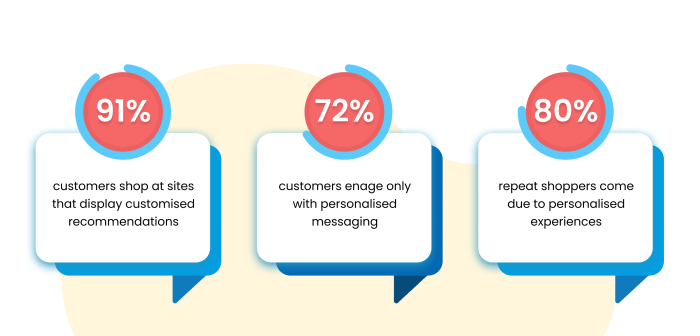
Implementing personalized customer service strategies offers significant advantages. Increased customer loyalty is a primary benefit; customers who feel valued and understood are more likely to return and recommend the business to others. This translates to improved customer retention rates and a higher lifetime customer value. Furthermore, personalized service can lead to increased sales and revenue, as customers are more likely to make purchases when they feel understood and catered to.
Improved brand reputation and positive word-of-mouth marketing are also significant outcomes.
Examples of Businesses Successfully Using Personalized Customer Service
Amazon is a prime example of a company that leverages personalization effectively. Their recommendation engine, which suggests products based on past purchases and browsing history, is a hallmark of their personalized approach. Netflix’s recommendation system similarly tailors movie and TV show suggestions to individual user preferences, enhancing the viewing experience. Spotify also uses algorithms to create personalized playlists, fostering user engagement and satisfaction.
These examples demonstrate how data-driven personalization can significantly improve customer experience and engagement.
Key Differences Between Personalized and Generic Customer Service
The core difference lies in the level of individual attention and customization. Generic customer service employs a one-size-fits-all approach, providing the same level of service and information to every customer. Personalized service, conversely, tailors the interaction to the specific needs and preferences of each customer. Generic service might involve standardized scripts and automated responses, while personalized service utilizes customer data and insights to create a unique and meaningful interaction.
The outcome is a significantly improved customer experience with personalized service, leading to stronger customer relationships and increased business success.
Data Collection and Analysis for Personalization
Effective personalization hinges on the ethical and responsible collection and analysis of customer data. This involves transparent data practices, robust security measures, and a commitment to respecting customer privacy. The following sections detail best practices for achieving this balance.
Understanding customer preferences and needs requires a multifaceted approach. Data collection must be purposeful, transparent, and compliant with relevant regulations. Analysis techniques must be sophisticated enough to identify meaningful patterns and insights without compromising individual privacy.
Ethical Data Collection Methods
Ethical data collection prioritizes transparency and user consent. Customers should be clearly informed about what data is being collected, how it will be used, and who will have access to it. Methods like explicit opt-in forms, clear privacy policies, and data minimization (collecting only necessary data) are crucial. For example, instead of collecting a customer’s entire browsing history, a website might only collect data on products viewed or added to a cart.
This reduces the amount of personal data held and improves data security. Furthermore, offering granular control over data sharing preferences empowers users and fosters trust.
Customer Data Analysis Techniques
Analyzing customer data involves identifying patterns and trends to understand preferences and needs. Techniques include:
- Customer Segmentation: Grouping customers based on shared characteristics (demographics, purchase history, website behavior) to tailor marketing and product recommendations.
- Predictive Modeling: Using historical data to predict future behavior, such as purchase likelihood or churn risk. For example, a model could predict which customers are likely to abandon their shopping cart and trigger a targeted email reminder.
- Natural Language Processing (NLP): Analyzing customer reviews, feedback, and social media mentions to understand sentiment and identify unmet needs. For instance, NLP could analyze customer reviews to pinpoint common complaints about a product, allowing for product improvements.
- Recommendation Engines: Using collaborative filtering or content-based filtering to suggest products or services based on past behavior or similar customer preferences. Amazon’s product recommendations are a prime example of this technique.
Data Privacy Policy for Personalization
A robust data privacy policy is essential for building trust and complying with regulations like GDPR and CCPA. The policy should clearly Artikel:
- Data Collected: Specify the types of data collected (e.g., browsing history, purchase history, demographic information).
- Purpose of Collection: Explain how the data will be used for personalization (e.g., targeted advertising, product recommendations).
- Data Sharing: Detail whether data will be shared with third parties and under what circumstances.
- Data Retention: Specify how long the data will be stored and the process for data deletion.
- User Rights: Clearly state user rights, including the right to access, correct, or delete their data.
Data Security and Integrity Best Practices
Protecting customer data is paramount. Best practices include:
- Data Encryption: Encrypting data both in transit and at rest to protect against unauthorized access.
- Access Control: Implementing strict access controls to limit who can access customer data.
- Regular Security Audits: Conducting regular security audits to identify and address vulnerabilities.
- Data Loss Prevention (DLP): Implementing DLP measures to prevent accidental or malicious data loss.
- Compliance with Regulations: Adhering to relevant data privacy regulations (e.g., GDPR, CCPA).
Implementing Personalized Service Channels
Successfully implementing personalized customer service requires leveraging the right channels to deliver tailored experiences. Choosing the appropriate channel depends on customer preferences, the nature of the interaction, and the level of personalization required. Effective integration across multiple touchpoints is crucial for a seamless and consistent customer journey.
This section explores the implementation of personalized service across various channels, comparing their strengths and weaknesses, outlining integration strategies, and discussing the role of AI.
Email, Chatbots, and Social Media for Personalized Service: A Comparison
Email, chatbots, and social media each offer unique advantages and disadvantages for delivering personalized service. Email allows for detailed, personalized messages and attachments, but can feel impersonal at scale and suffer from low open rates. Chatbots provide immediate, 24/7 support and can be programmed with personalized responses based on customer data, however, they can lack the empathy and nuanced understanding of human agents.
Social media platforms offer a highly interactive environment for personalized engagement, but managing multiple platforms and maintaining brand consistency can be challenging. The optimal strategy often involves a multi-channel approach, leveraging the strengths of each. For instance, a welcome email could be followed up by targeted social media ads, with chatbot support available for immediate queries.
Integrating Personalized Messaging Across Customer Touchpoints
A successful personalization strategy necessitates a cohesive approach across all customer touchpoints. This involves creating a unified customer profile that integrates data from various sources, including CRM systems, website analytics, and social media interactions. A well-defined plan is essential, outlining how personalized messages will be triggered based on customer behavior and preferences. For example, a customer who abandons their shopping cart might receive a personalized email reminder, while a customer celebrating a birthday might receive a special offer via social media.
Consistent branding and messaging across all channels are critical to maintain a unified customer experience.
Step-by-Step Guide to Personalizing Interactions Across Communication Channels
- Define Customer Segments: Identify key customer segments based on demographics, behavior, and preferences. This segmentation forms the basis for targeted messaging.
- Gather and Analyze Data: Collect relevant customer data from various sources, ensuring data privacy and security. Analyze this data to understand customer needs and preferences.
- Develop Personalized Messaging Templates: Create customizable email, chatbot, and social media templates that incorporate dynamic content based on customer data. Examples include personalized greetings, product recommendations, and targeted offers.
- Integrate with Communication Platforms: Integrate the personalized messaging templates with your chosen communication platforms, ensuring seamless delivery and tracking.
- Monitor and Optimize: Continuously monitor the performance of your personalized messaging campaigns and make adjustments based on data analysis. Key metrics include open rates, click-through rates, and conversion rates.
Advantages and Disadvantages of AI-Powered Personalization Tools
AI-powered tools offer significant advantages in personalizing customer service, including the ability to analyze large datasets, automate tasks, and deliver highly targeted messaging at scale. They can improve efficiency, reduce costs, and enhance the customer experience. However, relying solely on AI can lead to impersonal interactions, lack of human empathy, and potential biases in data analysis. Furthermore, the implementation and maintenance of AI-powered tools can be complex and expensive.
A balanced approach that combines AI capabilities with human oversight is often the most effective strategy. For example, an AI chatbot can handle routine inquiries, while human agents can address more complex or sensitive issues.
Measuring the Effectiveness of Personalized Service
Effectively measuring the success of personalized customer service requires a strategic approach focusing on key performance indicators (KPIs) and a robust system for collecting and analyzing customer feedback. By tracking the right metrics and understanding how personalization impacts customer behavior, businesses can refine their strategies and maximize their return on investment. This section Artikels methods for quantifying the impact of personalization and using data analysis to continuously improve the customer experience.Key Performance Indicators (KPIs) for Personalized Service SuccessChoosing the right KPIs is crucial for understanding the effectiveness of personalization efforts.
These metrics should directly reflect the goals of your personalization strategy, whether it’s increasing customer lifetime value, improving conversion rates, or enhancing customer satisfaction. Focusing on a select few key metrics prevents data overload and allows for clearer insights.
KPIs for Measuring Personalization Effectiveness
A well-rounded approach to measuring personalization success typically includes a combination of quantitative and qualitative metrics. Examples of effective KPIs include:
- Conversion Rate: This measures the percentage of personalized interactions that result in a desired action, such as a purchase, subscription, or sign-up. A significant increase in conversion rate following the implementation of personalization suggests its effectiveness.
- Customer Lifetime Value (CLTV): This metric assesses the total revenue generated by a customer over their entire relationship with the business. Personalization should ideally increase CLTV by fostering stronger customer relationships and encouraging repeat purchases.
- Customer Satisfaction (CSAT) Scores: Regularly surveying customers about their satisfaction with personalized experiences provides valuable qualitative data. Higher CSAT scores indicate a positive response to personalization efforts.
- Net Promoter Score (NPS): This metric measures customer loyalty and willingness to recommend the business to others. A higher NPS suggests that personalized service is enhancing brand loyalty.
- Click-Through Rate (CTR): For personalized email campaigns or website content, CTR indicates the effectiveness of personalized messaging in driving engagement. Higher CTRs reflect improved targeting and relevance of personalized content.
Tracking and Analyzing Customer Feedback
Gathering and analyzing customer feedback is essential for understanding the effectiveness of personalization initiatives and identifying areas for improvement. This feedback can be both quantitative (e.g., ratings, scores) and qualitative (e.g., comments, reviews).
A robust system for tracking and analyzing customer feedback should include:
- Surveys: Regular customer satisfaction surveys can assess the impact of personalized experiences on overall satisfaction. These surveys should be targeted to specific customer segments or interactions to gain more granular insights.
- Feedback Forms: Integrating feedback forms into personalized interactions (e.g., after a chat session, email interaction, or website visit) allows for immediate feedback collection.
- Social Media Monitoring: Tracking mentions of your brand and personalized experiences on social media platforms can provide valuable insights into customer perceptions.
- Customer Support Interactions: Analyzing customer service interactions can reveal patterns and issues related to personalization. For example, recurring complaints about inaccurate personalization might point to flaws in the data used for personalization.
Quantifying the Impact of Personalized Service
Quantifying the impact of personalized service on customer satisfaction and loyalty involves correlating changes in KPIs with the implementation of personalization strategies. For example, a comparison of conversion rates before and after implementing a personalized recommendation engine can demonstrate its effectiveness.
Analyzing the data collected through the various methods described above allows for a comprehensive understanding of the impact of personalized service. This includes:
- A/B Testing: Comparing the performance of personalized experiences against control groups (without personalization) helps to isolate the impact of personalization.
- Regression Analysis: This statistical technique can be used to identify the relationship between personalization efforts and key outcomes, such as customer satisfaction or loyalty.
- Cohort Analysis: By tracking the behavior of different customer groups over time, cohort analysis can reveal the long-term impact of personalization on customer retention and revenue.
Using Data Analysis to Improve Personalization Strategies
Data analysis plays a crucial role in continuously improving personalization strategies. By regularly reviewing and analyzing data, businesses can identify areas for improvement and optimize their personalization efforts.
Examples of using data analysis to improve personalization strategies include:
- Identifying underperforming segments: Analyzing data on customer segments can reveal which groups are not responding well to personalized efforts, allowing for targeted adjustments.
- Optimizing messaging: Analyzing the effectiveness of different personalized messages can help to refine the language, tone, and content to improve engagement.
- Improving data accuracy: Identifying inconsistencies or inaccuracies in customer data can help to improve the quality of personalization and reduce errors.
- Developing new personalization strategies: Analyzing data on customer preferences and behavior can inspire the development of new and innovative personalization strategies.
Personalized Service and Customer Retention
Personalized customer service is intrinsically linked to higher customer retention rates. By fostering a sense of individual value and understanding, businesses cultivate stronger relationships, leading to increased loyalty and reduced customer churn. This approach moves beyond transactional interactions to build genuine connections, ultimately boosting the customer lifetime value.Personalized service directly addresses the root causes of customer churn. When customers feel heard, understood, and valued, they are less likely to seek alternatives.
Proactive engagement, tailored recommendations, and responsive support demonstrate a commitment to the customer’s success, creating a compelling reason to stay. This proactive approach strengthens the customer-business relationship and makes switching providers less appealing.
Strategies for Improving Customer Lifetime Value through Personalized Service
Implementing personalized service strategies can significantly enhance customer lifetime value (CLTV). By focusing on individual needs and preferences, businesses can increase customer engagement, purchase frequency, and overall spending. This results in a substantial return on investment in the long run.
| Strategy | Description | Implementation | Outcome |
|---|---|---|---|
| Targeted Promotions | Offering discounts, special offers, and product recommendations based on past purchases and browsing history. | Utilize CRM data and behavioral analytics to segment customers and personalize marketing campaigns. Send targeted emails or in-app notifications. | Increased sales, improved conversion rates, higher average order value. Example: A clothing retailer sending a personalized email to a customer who frequently purchases jeans, offering a discount on a new jean style. |
| Proactive Customer Support | Anticipating customer needs and providing assistance before issues arise. | Employ AI-powered chatbots to monitor customer activity and identify potential problems. Offer personalized tutorials or FAQs based on usage patterns. | Reduced customer service tickets, improved customer satisfaction, enhanced brand loyalty. Example: A software company proactively contacting a user who is struggling with a specific feature, offering personalized support and tutorials. |
| Personalized Recommendations | Suggesting products or services relevant to individual customer preferences and past behavior. | Leverage collaborative filtering and recommendation engines to personalize product displays and email marketing. | Increased sales, improved customer engagement, discovery of new products and services. Example: An online bookstore recommending books based on a customer’s reading history and preferences. |
| Loyalty Programs with Personalized Rewards | Offering tiered rewards and exclusive benefits based on customer engagement and spending. | Develop a loyalty program with personalized milestones and rewards, such as early access to new products or exclusive discounts. | Increased customer retention, improved customer loyalty, enhanced brand advocacy. Example: A coffee shop offering a free drink after a customer’s tenth purchase, along with personalized birthday offers. |
Challenges and Best Practices in Personalized Customer Service
Implementing personalized customer service, while offering significant benefits, presents several hurdles. Successfully navigating these challenges requires a strategic approach that balances technological capabilities with ethical considerations and a deep understanding of customer needs. This section will explore these challenges and Artikel best practices for building a robust and ethical personalized service program.
Data Privacy and Security Concerns
The foundation of personalized customer service is data. However, collecting, storing, and utilizing customer data raises significant privacy and security concerns. Data breaches can lead to reputational damage, financial losses, and legal repercussions. Furthermore, customers are increasingly wary of how companies use their personal information, demanding transparency and control over their data. This necessitates robust security measures, including encryption, access controls, and regular security audits.
Compliance with data privacy regulations, such as GDPR and CCPA, is paramount. A clear and concise privacy policy, readily accessible to customers, outlining data collection practices, usage, and security measures, is essential for building trust.
Maintaining Data Accuracy and Completeness
Inaccurate or incomplete customer data can lead to ineffective personalization efforts, resulting in frustrating customer experiences. For example, sending a birthday email to the wrong date or recommending products irrelevant to a customer’s preferences undermines the entire personalization strategy. Implementing data quality management processes, including data validation, cleansing, and regular updates, is crucial. Integrating data from multiple sources, while ensuring consistency and accuracy, can improve the overall picture of the customer.
Investing in data quality tools and training employees on data handling best practices are vital steps in ensuring data accuracy.
Balancing Personalization with Customer Expectations
While personalization enhances the customer experience, it’s crucial to avoid being overly intrusive or creating an unsettling experience. Customers appreciate relevant recommendations and tailored interactions, but they also value their privacy and autonomy. Striking the right balance is crucial. Providing customers with clear and simple mechanisms to control their data and communication preferences, such as opt-out options and preference centers, is essential.
A transparent approach to data usage and a commitment to respecting customer choices are critical for maintaining trust and fostering positive relationships.
Cost and Resource Constraints
Implementing a robust personalized customer service program requires significant investment in technology, infrastructure, and skilled personnel. This can be a barrier for smaller businesses or those with limited resources. However, starting small and scaling gradually can mitigate this challenge. Focusing on specific customer segments or using readily available tools can help reduce initial costs. A phased approach, prioritizing areas with the highest potential return on investment, can also ensure efficient resource allocation.
Ethical Considerations in Data Usage
The ethical implications of using customer data for personalization cannot be overlooked. Transparency is key – customers should understand how their data is being used and have the ability to opt out. Avoiding discriminatory practices based on personal data is crucial, ensuring fair and equitable treatment for all customers. Regular ethical reviews of data usage practices are necessary to proactively identify and address potential ethical concerns.
For instance, using customer data to create targeted advertising for products they cannot afford or for services they have specifically excluded in their preference settings is unethical and could damage the company’s reputation. Amazon’s recommendation engine, while generally considered successful, has faced criticism for potentially reinforcing biases present in the data it uses. This highlights the need for constant vigilance and ethical oversight in personalization efforts.
Checklist for a Successful Personalized Customer Service Program
Before launching a personalized customer service program, a thorough checklist ensures a smooth implementation and positive outcomes. This checklist includes:
- Clearly defined goals and objectives for the program.
- Comprehensive data collection and analysis strategy.
- Selection of appropriate personalization technologies and tools.
- Development of personalized customer journey maps.
- Implementation of robust data security and privacy measures.
- Establishment of clear communication protocols and channels.
- Training for employees on personalized service best practices.
- Regular monitoring and evaluation of program effectiveness.
- Mechanisms for gathering customer feedback and making adjustments.
- A well-defined process for handling customer data disputes and complaints.
Case Studies
Successful personalized customer service initiatives demonstrate a significant return on investment, improving customer satisfaction, loyalty, and ultimately, profitability. Examining specific examples provides valuable insights into effective strategies and their measurable impact. The following case studies illustrate diverse approaches to personalization, highlighting best practices and potential challenges.
Amazon’s Personalized Recommendations
The effectiveness of Amazon’s personalized recommendations is widely acknowledged. Their approach relies on sophisticated data analysis to anticipate customer needs and preferences.
- Approach: Amazon utilizes a collaborative filtering system, analyzing purchasing history, browsing behavior, and product reviews to suggest relevant items. This is further enhanced by incorporating external data sources and real-time interactions.
- Results: Amazon reports a significant increase in sales driven by personalized recommendations. The system contributes to higher conversion rates and average order values. Specific figures are not publicly available due to competitive reasons, but the impact is undeniable.
- Key Learnings: The success of Amazon’s approach highlights the importance of leveraging diverse data sources and advanced algorithms to deliver highly relevant recommendations. Continuous refinement and adaptation of the recommendation engine are also crucial.
An accompanying image would show a screenshot of an Amazon product page, highlighting the “Customers who bought this item also bought…” section and the personalized recommendations displayed below it. The image would emphasize the variety and relevance of the suggested products, clearly illustrating the personalization engine at work. The visual would showcase a user-friendly interface and the seamless integration of recommendations into the shopping experience.
Spotify’s Personalized Playlists
Spotify’s use of personalized playlists has become a benchmark for music streaming services. Their ability to curate unique playlists based on individual listening habits enhances user engagement and satisfaction.
- Approach: Spotify utilizes machine learning algorithms to analyze user listening history, preferences, and even the time of day and context to generate customized playlists such as “Discover Weekly” and “Release Radar”.
- Results: The introduction of personalized playlists significantly increased user engagement, leading to increased listening time and retention. This translated into higher subscription rates and overall revenue growth. Specific data on these increases are proprietary but the impact on the market is significant.
- Key Learnings: Understanding and leveraging user context, beyond simple listening history, is key to creating truly personalized experiences. The iterative development and continuous improvement of the algorithms are essential for maintaining relevance and user satisfaction.
The accompanying image would be a screenshot of the Spotify app showcasing a user’s personalized “Discover Weekly” playlist. The image would emphasize the unique song selection and the visually appealing playlist cover art. It would highlight the playlist’s name and description, clearly demonstrating the personalized nature of the offering.
Sephora’s Beauty Insider Program
Sephora’s Beauty Insider program exemplifies the power of personalized loyalty programs in enhancing customer relationships. The program combines rewards with personalized product recommendations and experiences.
- Approach: The Beauty Insider program collects data on purchase history, product preferences, and beauty routines. This information is used to offer personalized product recommendations, exclusive offers, and invitations to events.
- Results: Sephora has seen significant increases in customer loyalty and repeat purchases through this program. Members tend to spend more and are more engaged with the brand. While exact figures are not publicly released, the program’s impact on customer lifetime value is considerable.
- Key Learnings: A successful loyalty program needs to go beyond simple rewards; personalized experiences and engagement are crucial. Data collection and analysis are essential for understanding customer preferences and delivering tailored offerings.
The image would depict a visually appealing graphic showcasing the Sephora Beauty Insider program. It would highlight the various tiers of the program, the rewards earned at each level, and possibly include an example of a personalized product recommendation or exclusive offer tailored to a hypothetical member’s profile. The visual would convey the program’s value proposition and its personalized nature.
Successfully implementing personalized customer service requires a strategic approach that balances data-driven personalization with ethical considerations and a genuine focus on customer needs. By thoughtfully collecting and analyzing customer data, employing appropriate technologies, and consistently measuring the effectiveness of strategies, businesses can cultivate strong customer relationships, enhance loyalty, and ultimately drive sustainable growth. The journey towards personalized service is an ongoing process of refinement and adaptation, continuously evolving to meet the ever-changing expectations of the modern customer.
FAQ Summary
What is the ROI of personalized customer service?
The ROI varies greatly depending on implementation and industry. However, improved customer satisfaction, increased loyalty, reduced churn, and higher lifetime value are common positive outcomes, ultimately leading to increased profitability.
How can I avoid alienating customers with overly personalized service?
Maintain transparency about data usage, offer opt-out options, and avoid overly intrusive or creepy personalization. Focus on providing relevant and helpful interactions, not overwhelming customers with excessive detail.
What are some affordable tools for implementing personalized customer service?
Many CRM systems offer basic personalization features. Free or low-cost email marketing platforms can also be used to segment audiences and personalize messaging. Consider starting with free tools and gradually upgrading as needed.